Upgrading Our GX470 Electrical System with a Renogy 200Ah Battery and 400W Solar Blanket
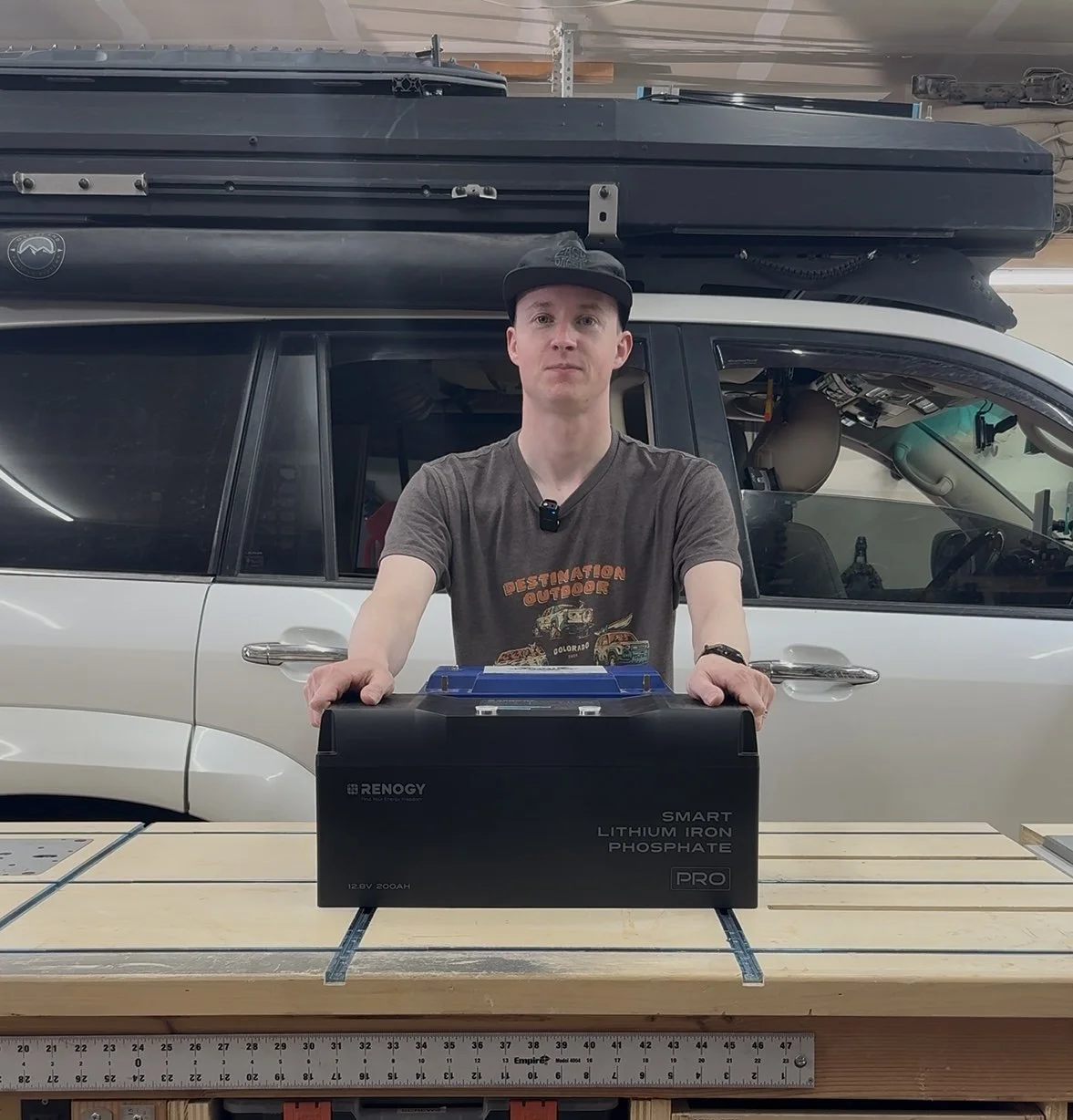
When we first built the auxiliary electrical system in our Lexus GX470 more than two years ago, our 100Ah lithium battery was enough to support the way we camped at the time.
Since then, our setup has continued to evolve. We’ve added more equipment, started relying on the electrical system for more of our everyday camp routine, and begun preparing the GX to be a four season camper.
Our original battery was still working well, but we wanted more capacity for longer stays, higher-draw appliances, and winter camping. That led us to upgrade to a Renogy 12V 200Ah Pro Smart LiFePO4 Battery and add a Renogy 400W Solar Panel Blanket to our charging setup.
After completing the installation, we tested the new system on a three-night camping trip to see how it handled our typical electrical loads and how effectively the solar blanket could recharge the battery while we were parked at camp.
Renogy provided the battery and solar blanket featured in this post as part of a collaboration. As always, the experiences and opinions shared here are our own.
Why We Wanted More Battery Capacity
Our original 100Ah battery powered the main components in our GX, including our Dometic drawer fridge, Velit gasoline heater, water pump, interior and exterior lighting, charging outlets, and other accessories.
As our build became more capable, we started asking more from the electrical system.
To support winter camping, we’ve added heating elements to our water system designed to help prevent freezing. We have heated wire around plumbing components and heated pads mounted to the water tank. These systems give us the ability to keep our water setup functional in colder conditions, but they also increase our power consumption.
Doubling our rated battery capacity from 100Ah to 200Ah gives us more room to run those systems without constantly watching the battery percentage.
For us, the upgrade was not about adding unnecessary electrical equipment. It was about building enough reserve capacity to comfortably use the equipment we already have, especially during the winter when our power needs are higher.
Watch Part 1: Why We Upgraded
Our GX470 Electrical System
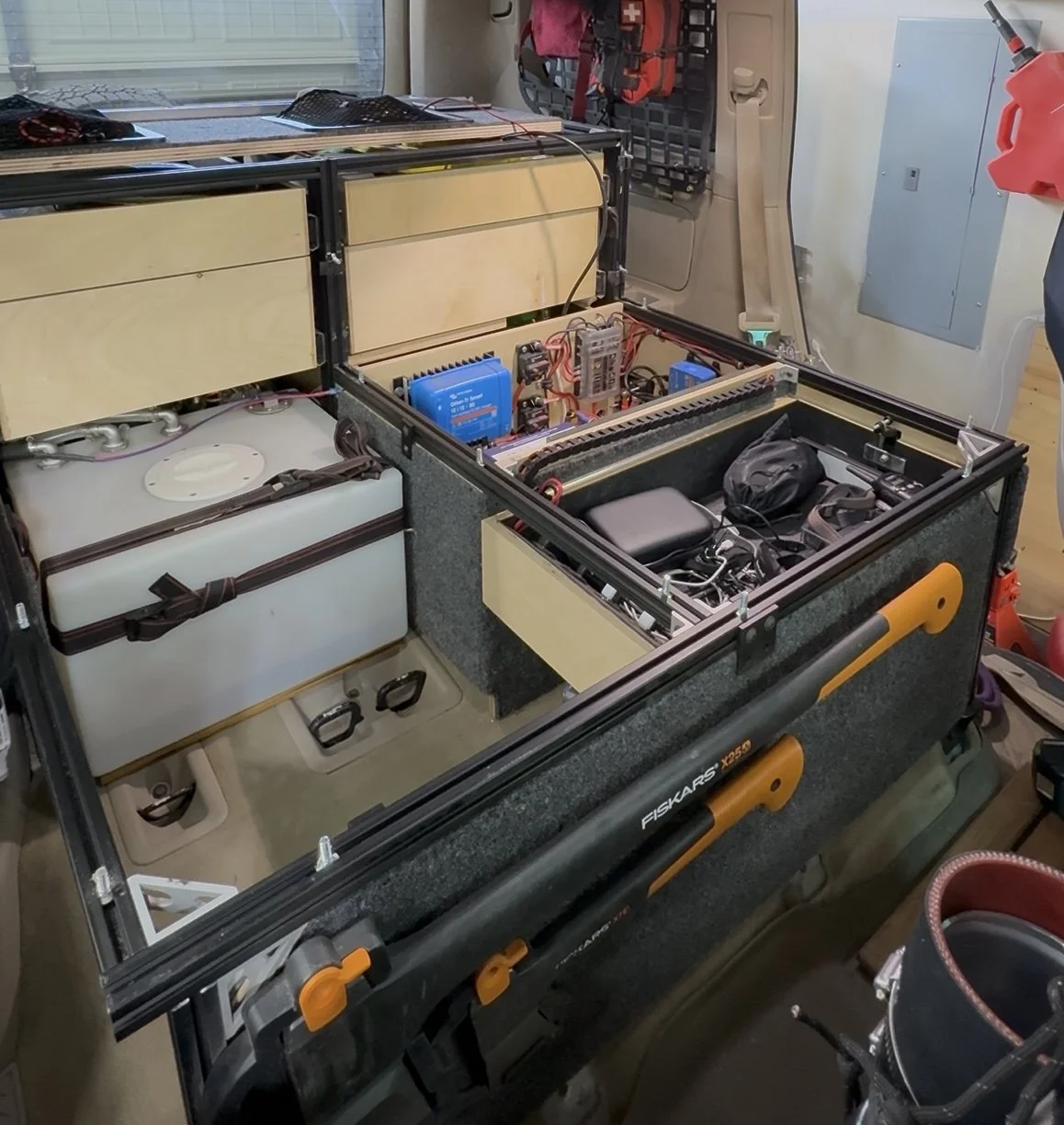
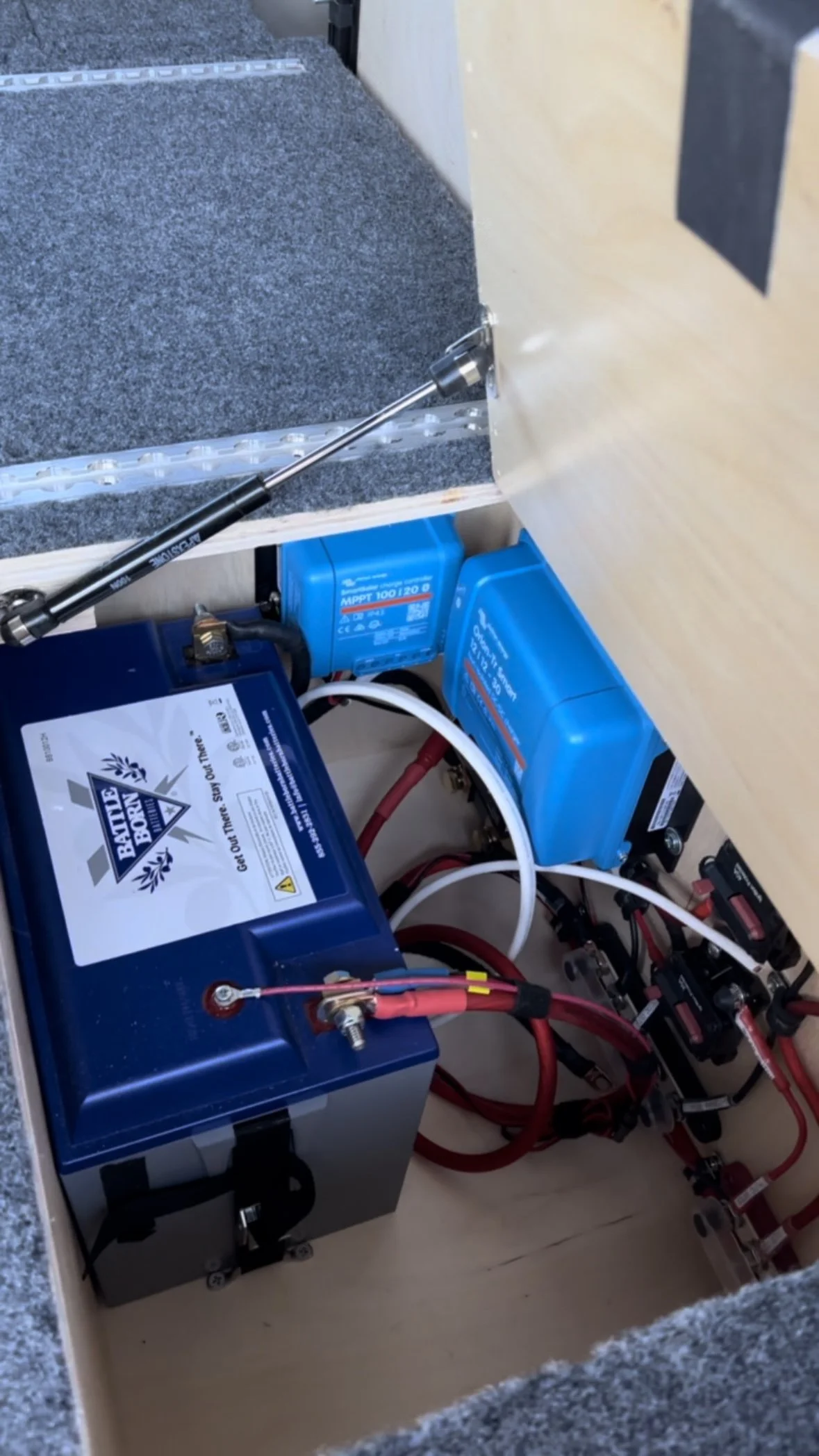
The electrical components in our GX are housed in what we call our battery box.
The battery box sits in the second-row seating area on the driver’s side of the vehicle. It contains the battery, charging equipment, monitoring components, fuse panels, wiring, and related electronics.
Our current system includes:
Renogy 12V 200Ah Pro Smart LiFePO4 battery
Victron SmartSolar MPPT 100/20 solar charge controller
Victron Orion-Tr Smart 30A DC-to-DC charger
Victron SmartShunt
Victron Cerbo GX
Victron GX Touch display
Victron inverter
Permanently mounted 100W solar panel
Renogy 400W portable solar blanket
Temperature-controlled ventilation fan
The DC-to-DC charger replenishes the battery while the GX is running, along with the fixed solar panel on our rooftop tent, and the portable solar blanket provides additional charging capability when the vehicle is parked.
The system powers our Dometic fridge, water pump, lighting, Velit gasoline heater, water-system heating equipment, electric kettle, ARB air compressor, charging outlets, and other accessories.
Temperature-Controlled Battery Box Ventilation
Because the battery and related electronics are enclosed inside the battery box, we also added active ventilation.
A fan is mounted on one wall of the box, with a vent on the opposing wall to allow air to move through the enclosure. The fan is powered by the Renogy battery and controlled through our Victron Cerbo GX.
When the temperature inside the battery box reaches the threshold we programmed, the Cerbo GX activates the fan. Air is then drawn through the box to help remove heat from the battery, chargers, and other electrical components.
Once the temperature drops, the fan shuts off automatically.
This lets us manage heat inside the battery box without needing to switch the fan on and off manually. It also means the ventilation system only runs when it’s needed.
Why We Chose the Renogy 200Ah Pro Battery
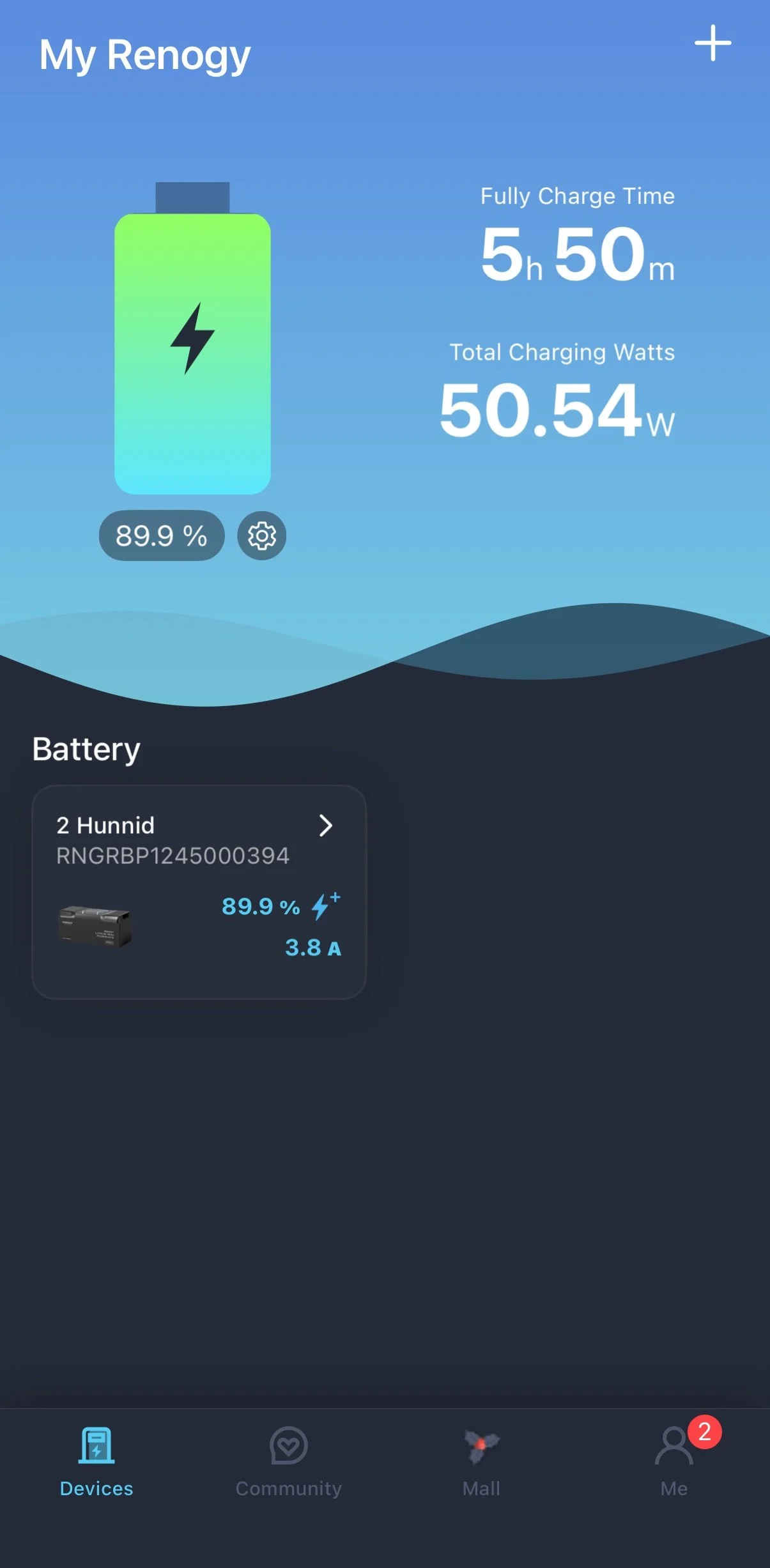
The main reason for choosing the Renogy battery was its 200Ah rated capacity. It doubled the nominal capacity of our previous battery while still fitting into the battery box we already had.
The battery also includes Bluetooth monitoring, self-heating, a built-in battery management system, and an IP67-rated enclosure.
Bluetooth Monitoring
The Renogy battery connects directly to the Renogy app, allowing us to view battery information from our phones.
We already monitor the overall electrical system through the Victron SmartShunt and Cerbo GX, but the Renogy app gives us direct access to the data reported by the battery itself.
Self-Heating for Winter Camping
The battery’s self-heating capability was another important feature for our build.
Cold-weather charging is one of the challenges of using lithium batteries during winter trips. The self-heating function helps bring the battery cells into an appropriate temperature range before charging begins in freezing conditions.
That’s particularly useful in our GX because winter camping is one of the main reasons we wanted more capacity.
Installing the Battery in Our GX470
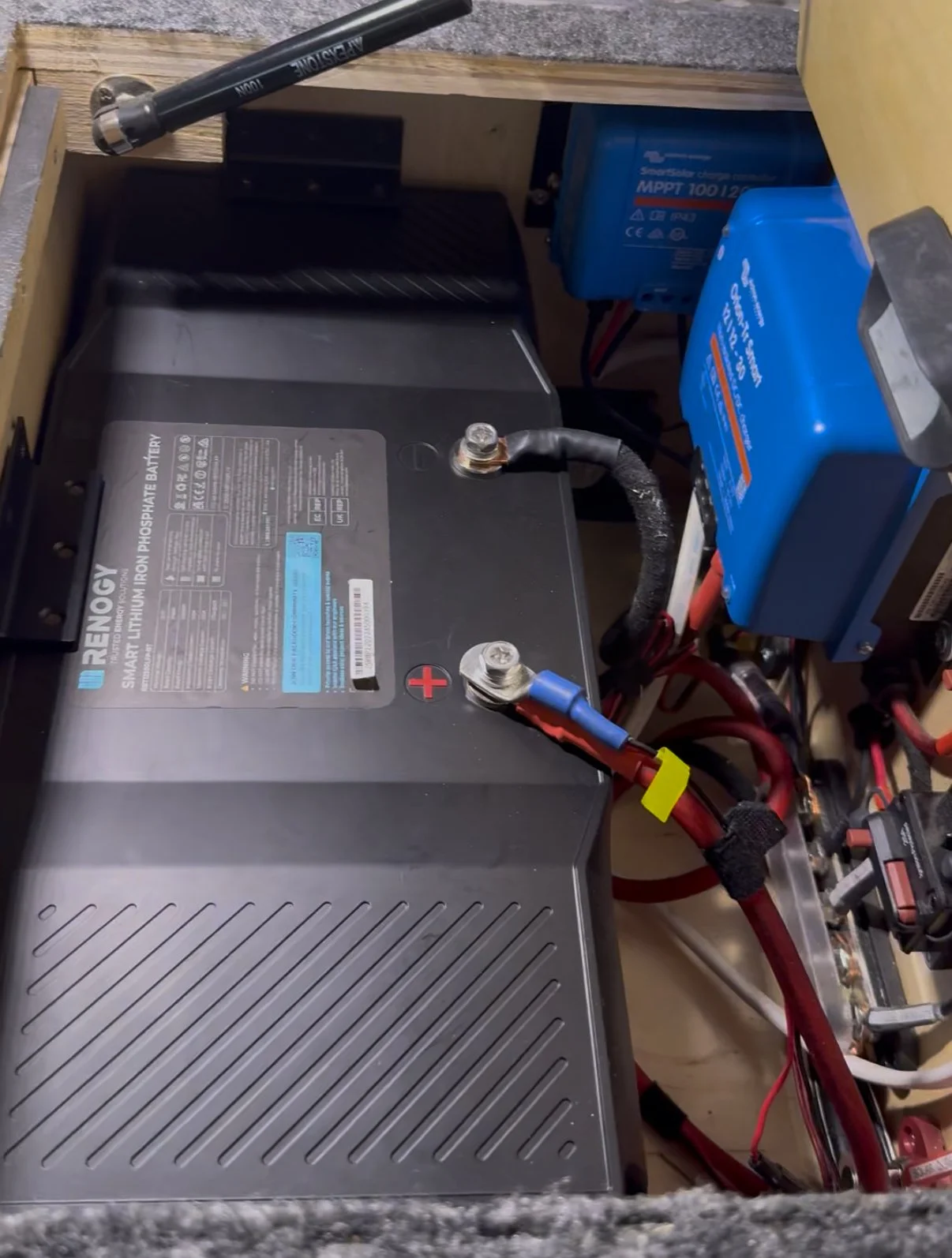
We began by shutting down the charging sources, disconnecting the original battery, and removing it from the enclosure. We then positioned the Renogy battery inside the box and confirmed that the terminals, cables, and surrounding components remained accessible.
Because the GX travels over rough roads and uneven terrain, the battery needs to be securely mounted so it doesn’t shift inside the enclosure, we just used a few L-brackets to help hold it in place.
The 200Ah battery fit perfectly without requiring us to rebuild the entire battery box, allowing us to double our rated capacity while keeping the rest of the system in its existing location.
Configuring the Victron System
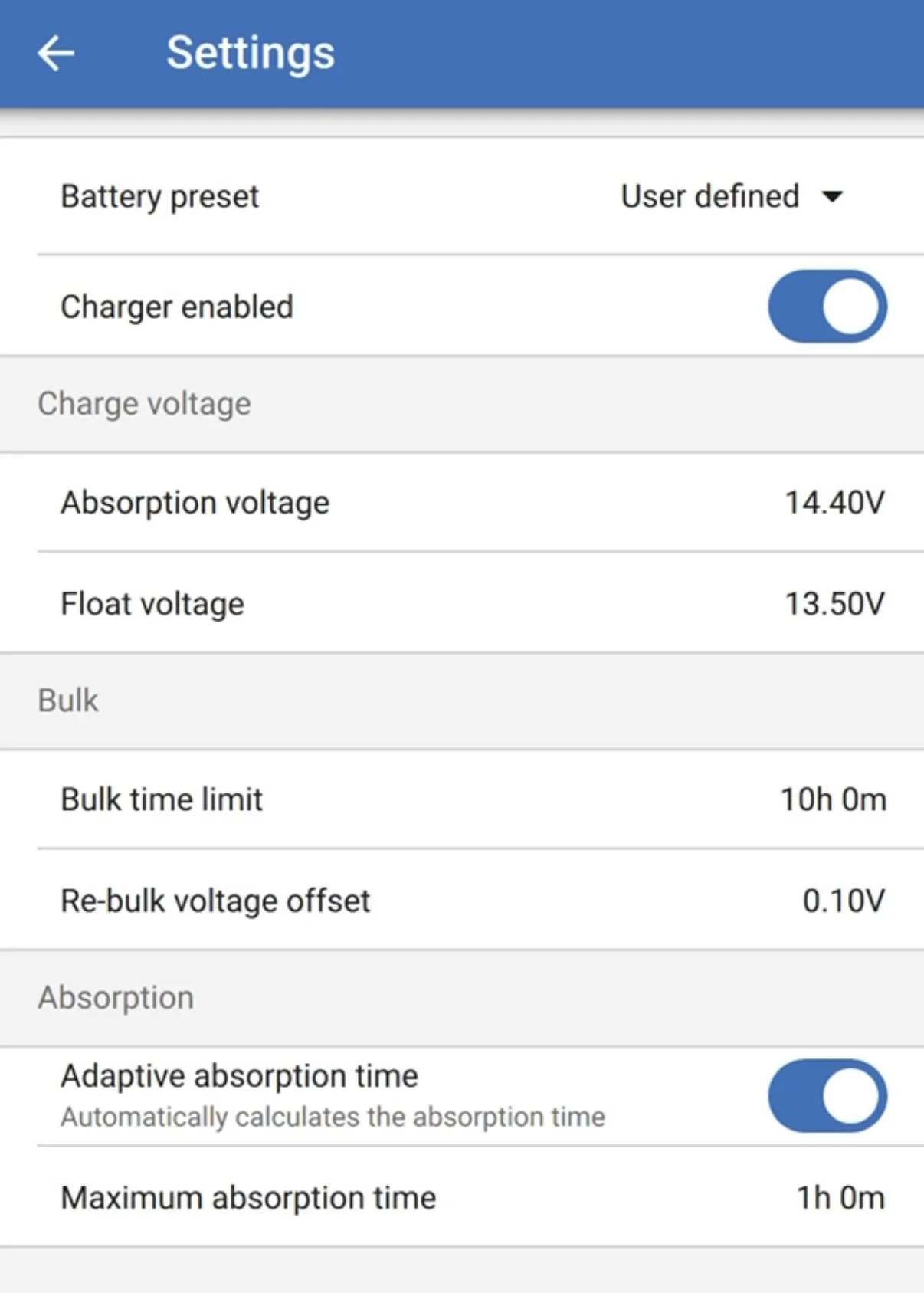
After installing the battery, we updated the settings in the Victron components to work with the new Renogy battery.
We adjusted the charging parameters in the Victron SmartSolar solar charge controller and Orion-Tr Smart DC-to-DC charger. We also changed the configured battery capacity in the Victron SmartShunt so its state-of-charge calculations reflected the new 200Ah battery.
Once the settings were updated, we tested the available charging sources and confirmed that the battery was charging and reporting properly through both the Victron and Renogy systems.
Watch Part 2: The Installation
Why We Added a 400W Portable Solar Blanket
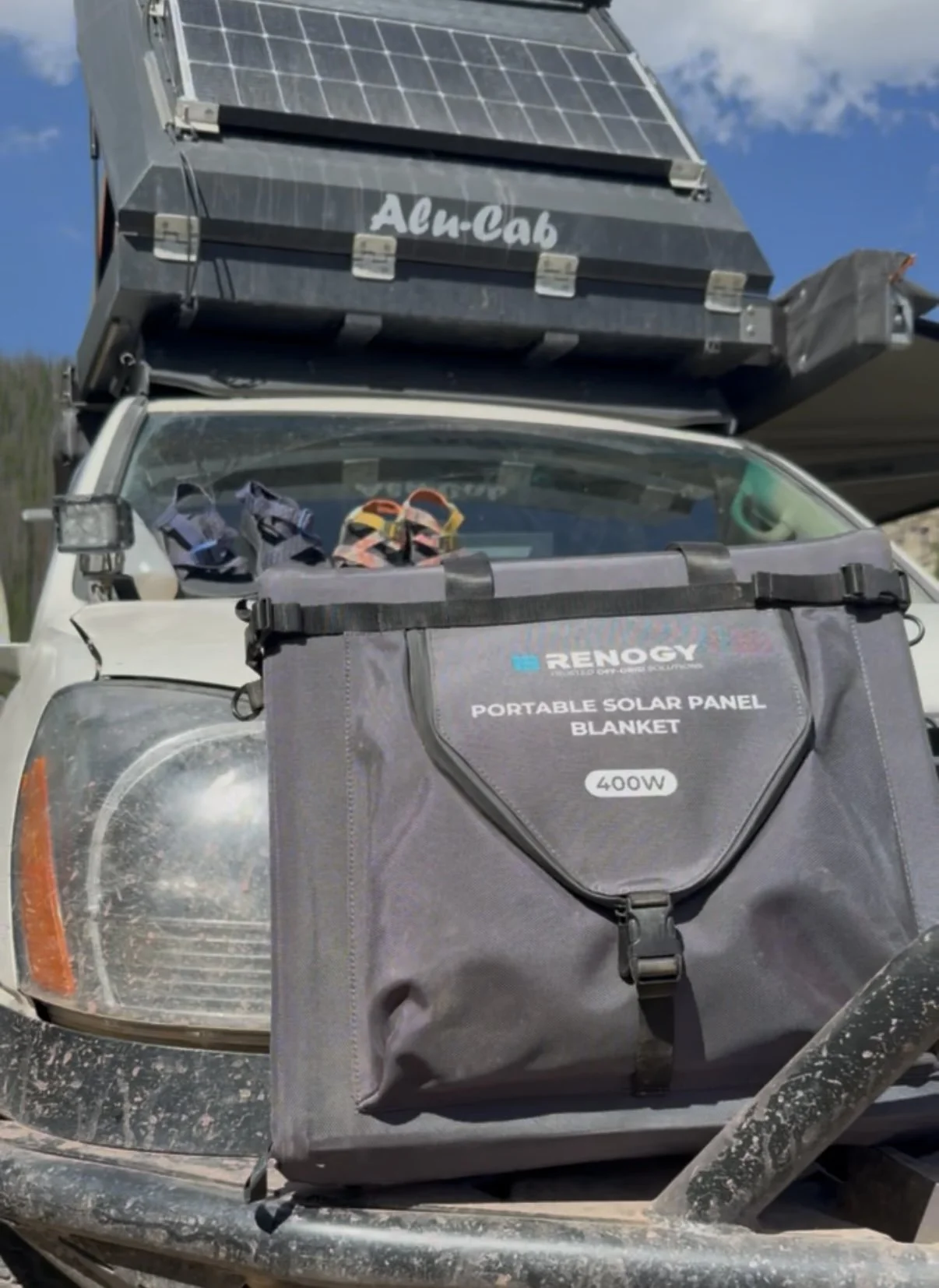
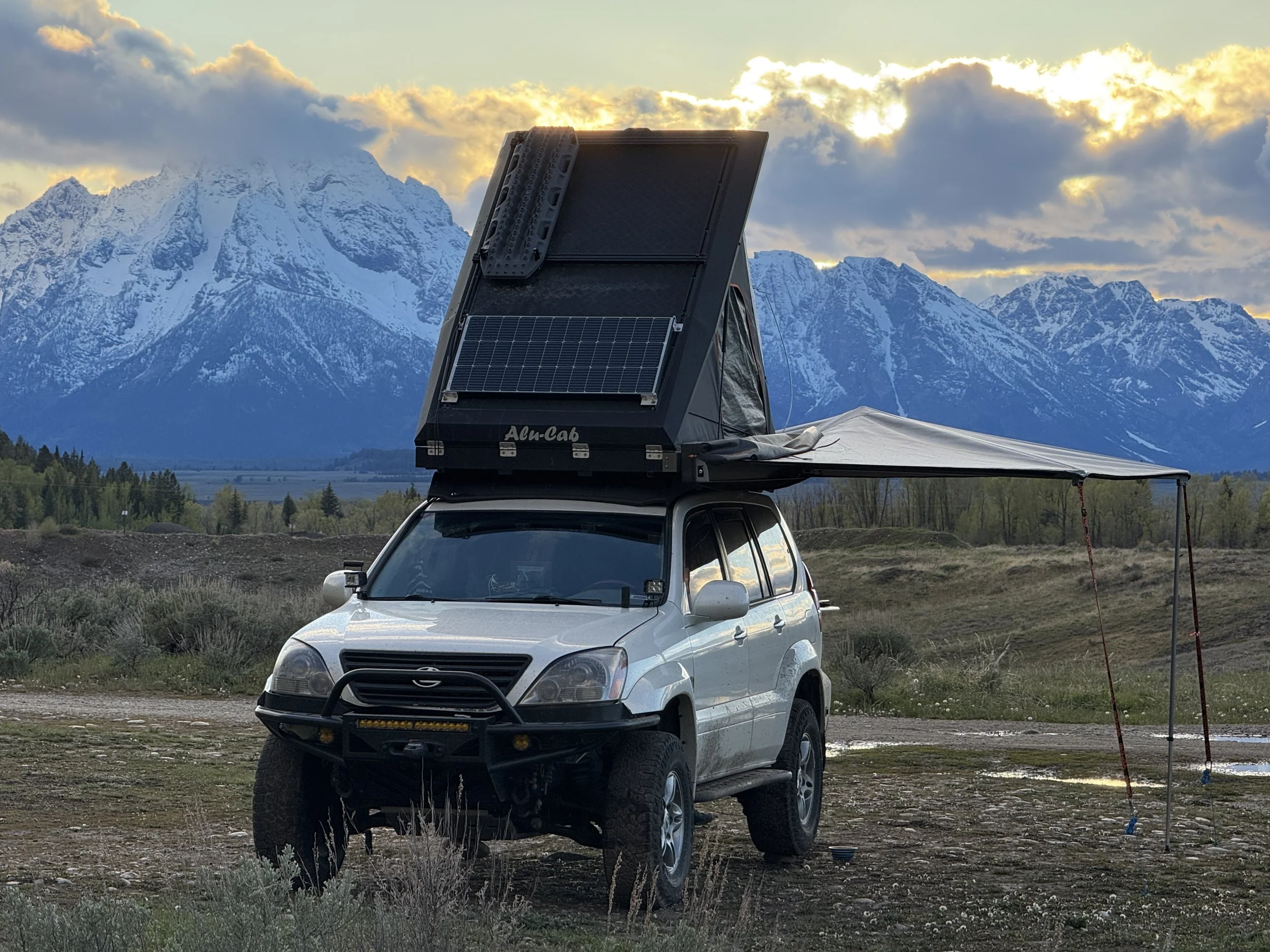
We already have a 100W Renogy solar panel permanently mounted to the top of our Alu-Cab rooftop tent.
That panel provides charging whenever it's exposed to sunlight, but a permanently mounted panel has limitations. The GX might be parked in the shade, the rooftop tent may not be angled toward the sun, or trees and terrain may block the panel during parts of the day.
The 400W portable solar blanket gives us more flexibility.
We can park the vehicle where it works best for camp and place the solar blanket in a separate sunny area. We can also adjust its position as the sun and shadows move throughout the day.
The blanket folds up for transport, making it possible to carry significantly more solar capacity without permanently covering the rooftop tent with rigid panels.
Testing the System on a Three-Night Camping Trip
Our first real test of the upgraded system was a three-night camping trip.
During the trip, the battery powered:
Our Dometic drawer fridge
The water pump as needed
Interior and exterior lighting
Our electric kettle
Our ARB air compressor
The battery-box ventilation fan when needed
We used the ARB compressor to air up the vehicle a couple of times during the trip. Because the compressor is also powered by the auxiliary battery, it added another higher-draw load to the test.
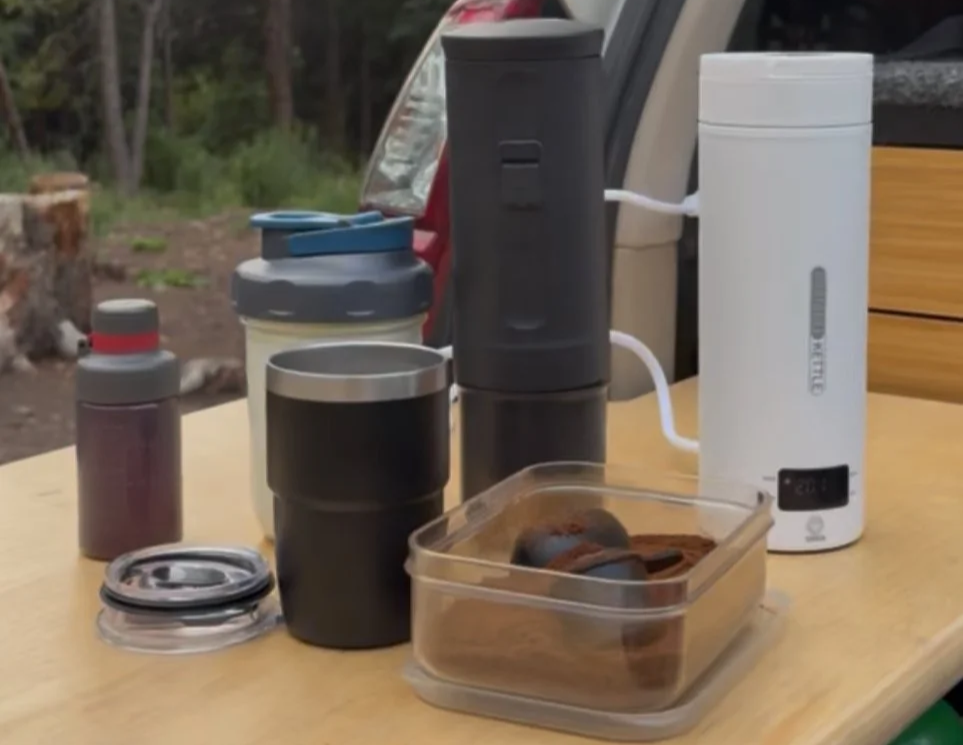
The electric kettle was used to heat water for our morning coffee or afternoon tea, while the fridge compressor cycled on and off as needed to maintain the set temperature.
We used the system normally rather than changing our routine to conserve power.
Overnight Battery Use
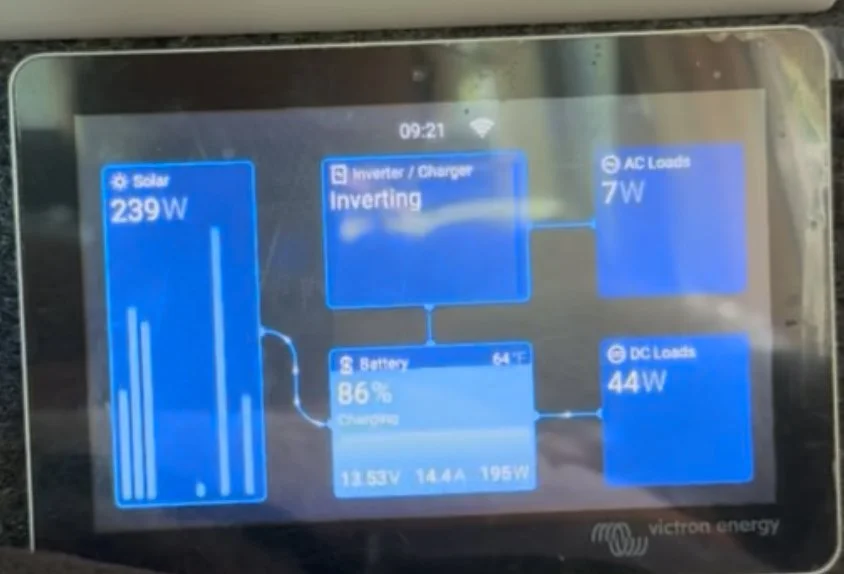
Each morning, the battery was at approximately 85% state of charge.
That meant our evening and overnight use consumed around 15% of the available battery capacity under the conditions we experienced.
This trip took place in relatively optimal conditions. We were not running the Velit heater overnight, the water-system heating elements were not needed, and the electric kettle did not need to be used as often as it likely will be during winter.
Because of that, we expect our winter energy use to be considerably higher.
Seeing approximately 85% remaining each morning during this trip showed us that the 200Ah battery gives us a substantial reserve for those more demanding winter conditions.
Instead of using most of the battery during a mild-weather trip, we now have additional capacity available for the systems that help keep us and the GX functional in the cold.
Charging with the Solar Blanket
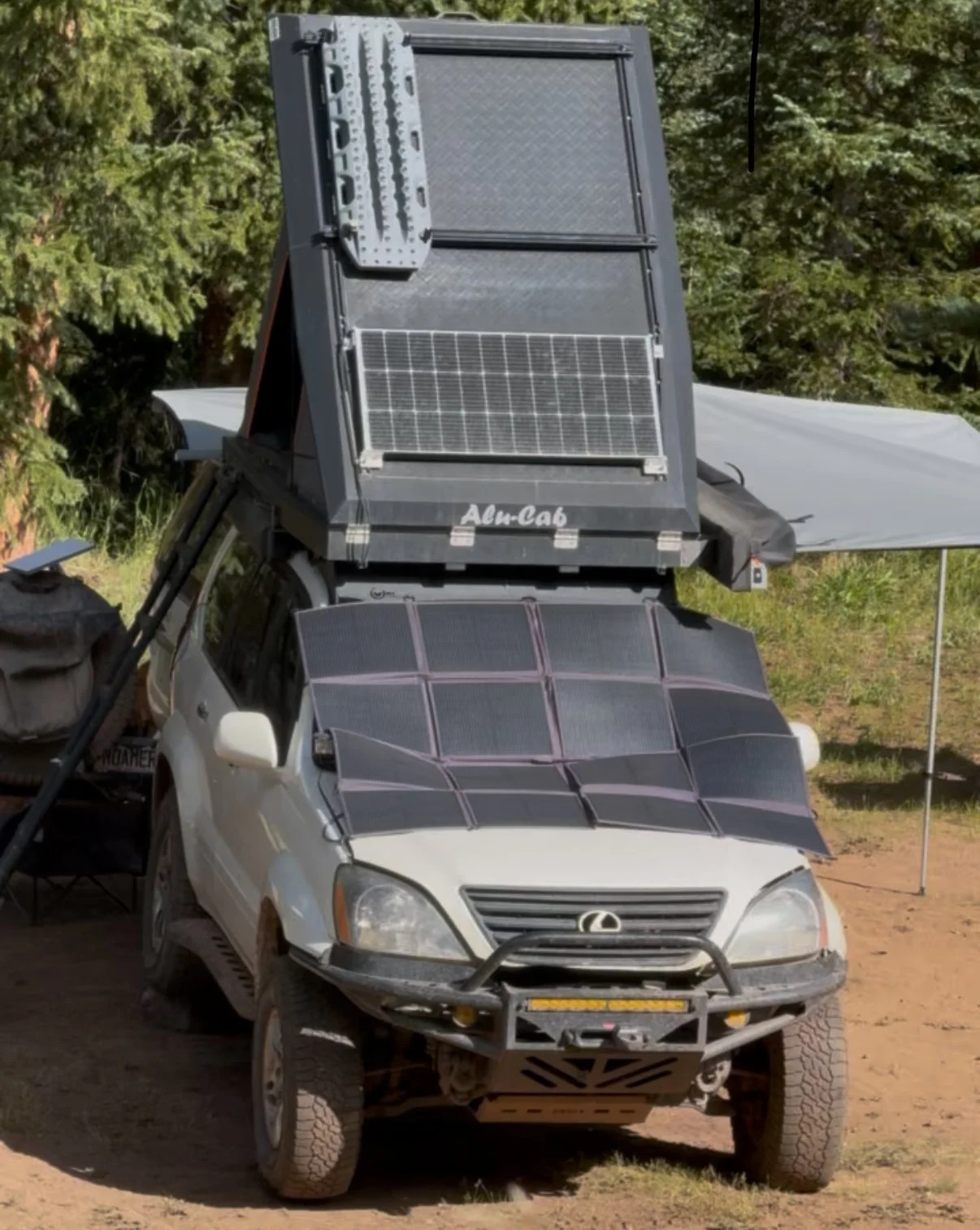
We parked the GX so the fixed panel on the rooftop tent would begin receiving sunlight in the morning.
Once sunlight reached the campsite, we unfolded the Renogy solar blanket and positioned it on the hood of the GX, or on the ground nearby. Because it's portable, we could angle and move it without changing where the GX was parked.
During the trip, we saw approximately 200 to 240 watts of solar charging.
The 240-watt ceiling was caused by our Victron SmartSolar MPPT 100/20 charge controller. The controller has a maximum charging-output current of 20 amps, which limits how much power it can deliver to the 12V battery.
Once the output reached approximately 240 watts, the charge controller became the limiting component in the system. The blanket had additional available capacity, but the controller could not pass more of it to the battery.
Portable and Fixed Solar Working Together
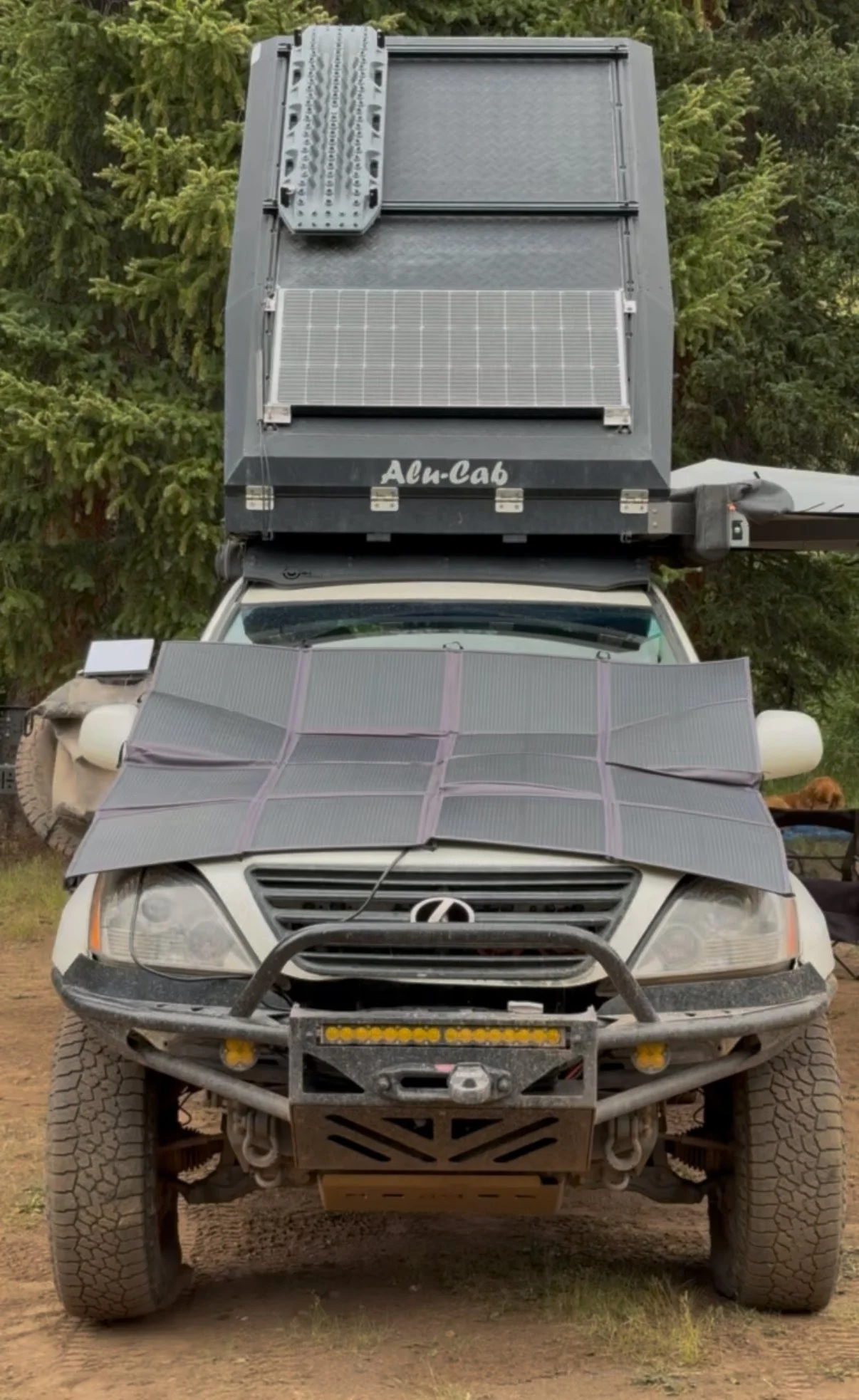
The 100W fixed panel and the 400W portable blanket serve different roles.
The fixed panel requires no setup. It can begin charging whenever sunlight reaches the rooftop tent, whether the GX is parked at camp, stopped during the day, or traveling in sunny conditions.
The portable blanket requires us to unpack and connect it, but it gives us much more solar capacity and the freedom to place it wherever sunlight is best.
For short trips, the fixed panel may provide all the charging we need. During longer stays, the solar blanket allows us to replace energy more quickly without starting the vehicle or leaving camp.
The blanket is especially useful when the GX is parked in the shade but there is an open, sunny area nearby.
We see the two solar sources as complementary rather than interchangeable.
What Surprised Us
The first surprise was the 219Ah capacity reported in the Renogy app.
The second was how much battery capacity remained each morning. Even after running the fridge, lights, water pump, kettle, ventilation fan, and ARB compressor during the trip, we woke up with approximately 85% remaining.
The third takeaway was how easily the solar blanket reached the limit of our current charge controller.
Our Victron SmartSolar MPPT 100/20 was originally selected for a much smaller solar setup. Now that we have added a 400W portable blanket, the controller has become the bottleneck.
That gives us a clear direction for the next stage of the electrical system.
What We Would Change
Our next likely upgrade will be a larger Victron solar charge controller.
A controller with greater output capacity would allow us to use more of the power available from the 400W blanket instead of being limited to approximately 240 watts.
We are also considering adding more fixed solar panels to the top of the rooftop tent.
The portable blanket works well while we are parked at camp, but additional fixed solar would provide more charging without requiring setup. It would also help replenish the battery during travel and shorter stops when we do not want to unfold the blanket.
Was the Upgrade Worth It?

For our GX build and the way we camp, the upgrade was well worth it.
The 200Ah battery gives us more freedom to run our existing equipment without needing to monitor every load. It also provides the additional capacity we expect to need during colder trips.
The 400W solar blanket gives us a practical way to replenish that energy during longer stays at camp, while the fixed panel continues providing passive charging with no setup.
The biggest improvement is not any one specification. It's the amount of reserve the system now provides.
We can use our equipment normally, stay in one place longer, and have more capacity available when conditions are colder, cloudier, or less predictable.
Watch Part 3: Real-World Camping Test
Products Featured in This Build
Renogy 12V 200Ah Pro Smart LiFePO4 Battery with Bluetooth and Self-Heating
View the battery on Renogy’s website
Renogy 400W Solar Panel Blanket
View the solar blanket on Renogy’s website
Renogy 100W N-Type solar panel